The Man Who Walked Home
“the surrounding countryside was locked into a zone where there was neither war nor peace, a vacuum …”
— J.G. Ballard
His vader had always been slightly off, a regular guy interested in numbers and normal, with an unassuming appreciation for the absurdities of life.
The picture: May 1945, west of Berlin, Wim is facing a dilapidated German woods house like something out of an abandoned Grimm’s fairy tale, posed in silver army boots and a military coat painted red with yellow stripes down the length of the sleeves that have by now stiffened significantly, giving him the wooden demeanor of a toy soldier, walking through a dark satire, half-swallowed smirk, a character actor with a bit part.
A man of solitude, Wim preferred a dark room – hanging photos to dry from wooden clothespins – to gatherings any larger than four. Imagine an inner life folded and placed at the foot of a tree in a sighing forest where the inhalation and exhalation merge with the prevailing wind.
Never hated people – especially not women, especially the kind ones; instead held onto a certain disappointment in mankind, the masses, especially those who congregate in vicious scrums of unthinkingness. Tribalism?
Religion? It was all just stories – before the war and after.
Whenever he showed an old snapshot of who he was about become – he’d regret it immediately, wince-snickering ever so slightly, retreating back into a self that he had learned to live inside of. Ferdinand, his son, is me and had come to know this well.
Wim had passed along some of this to Ferdinand months before passing on into an afterlife he did not believe in, preferring silence to explication, mystery over history, soft background music to marching music, music that could possibly touch him in a way he preferred not to be touched.
Wim taught Ferdinand – no, never taught – just hoping I’d understand that obedience did not a righteous person make; a dutiful citizen is not necessarily a principled one. He, a tall teen, had been plucked, the story goes, from the streets of Amsterdam by the Sicherheitsdienst [Nazi SS] and subsequently dispatched by train to work in an armaments factory as a forced laborer outside Berlin in 1943. A head-shake smirk acknowledging the ridiculousness of it all. His dagboek [his journal translated from the Dutch] offered greater detail:
May and June 1945: Can we survive on dreams alone? No, not without bread, greens, fresh milk still warm from the cow, homemade dandelion wine and smiles and bedding offered by the few who have survived and can overcome suspicion. I meet mostly women along my route from Berlin to Amsterdam. They had lost family, cows, purpose, their ability to mourn — and their virginities. Each one a door into someone somewhere else.
I will develop the negative to see Eva in tattered dress; bombed-out rubble background. Sweat, gunpowder, brick dust. Tears of cloth wrapped around bruised hands. I will keep the photo from Tineke’s eyes.
Maybe something inside allowed them to save a part of themselves like when you drop a cup and you manage to catch it before it hits the ground, acting as if nothing has happened. Is that the indomitable spirit of which they sometimes write about in the classics? Or is it just something fabricated by writers to paste atop melancholy to drive us onward, encouraged to ignore hopelessness?
I did not flee Berlin on 5 May and did not take the first train – or wagon out. Freedom comes like a gift-wrapped dare in the chaos of pillage, smoke, dust, and sexual assault that the Germans and Russians left behind. You’d think I’d want to get the hell out of there pronto. But there’s no real urgency. A feeling of relief, yes, like when you pierce a boil with a piece of broken glass to release the puss.
I ended up staying till the end of May. Why? I’ll never know, but it probably had to do with a woman, with food or shelter – or my dreaming of a way out. Yes, that German girl, Eva. Not a Nazi. She says. I want to believe her so I do. Survivor, wanted to sing in a choir. Or dream of happy times, a clean summer dress with flowers on them, white underwear and shiny shoes with new heels, eating Schwarzwälder Kirschtorte with a silver fork in the Kranzler, plus glühwein and schnaps. And yet we forever parted as easily as one might leave behind a half-finished coffee at your table in a cafe.
Had he known, Wim would have been disappointed in Ferdinand for going to the Amsterdam City Archive where, with an archivist’s assistance, he found records that determined Wim wasn’t exactly plucked from the streets against his will by the collar of his jacket in yet another attempt to out-dodge the authorities. Or he would have secretly admired Ferdinand’s resolve. His West Amsterdam Work Bureau registration card found in the Amsterdam City Archive revealed that he had registered as required without dramatic coercion. Although the mere rumor of reprisal is, of course, itself a kind of coercion.
His name appeared on the train transport list to Brandenburg, Berlin on 28.06.43. Conclusion: He’d done what he was told because he simply wanted to go on living and obedience was considered a better bet for longevity than noncompliance, going rogue, living in the shadows and, if necessary, going underground, joining the Resistance and risking very likely death. They say heroes are honored because there are so few of them. And are mostly dead.
In any case, he ended up in Berlin where he’d work as a forced laborer in a Siemens munitions factory. Does that somehow mean his will to survive came at the expense of nameless victims? Well, not exactly.
Although Ferdinand knew his father was someone for whom lies never worked, he wondered with no hope of actually discovering much more of the truth not already attached to the meticulously archived available data. After all, any truth will end up being fine because his father had long ago become ash that he and his brother and mother spread in a modest park that he favored for walks outside of an unexceptional town.
The countryside heading west out of Berlin is one big minefield and Friedhof [graveyard]. At Pilger Bauernhof [Pilgrim Farm], I met Sophia, a girl, maybe 24, older than me, smiling despite what she’d no doubt endured and despite me looking like a rag man scarecrow with a suspicious smirk in a clown’s outfit. She spoke English, refusing her native German, offering me clean, creek-washed underwear. Her father will never need them again anyway. Dead on some front she doesn’t know where, a victim of blind obedience or an inability to differentiate between man and uniform.
I was sweaty and grimy and she took me to her creek to wash. Did I not notice the calming sound of water pouring over the stones in the creek? And about the bruises on my back?… I honestly didn’t remember.
We stayed up late, eating greens, dandelion, curlydock, chicory and a few hard blueberries scavenged from nearby and something like gruel or porridge. I didn’t ask. I unfolded my water-damaged map with my smudged, penciled-in route already fading, on her bed of straw and rag. She pointed with a finger, showing me where we were – near Wernitz, west of Berlin. I held her finger, leading it across the route of maybe 30 km I covered that first day and 600 yet to hike. But wouldn’t I like to stay for a spell? She knew the answer and understood – at least acted like she did.
I told her how everyone was clogging the roads, blankets tied around waists with retrieved wire, saggy-backed horses pulling broken-wheeled carts or pressed into transport trains – I did not trust trains, the conductors, the roads or men in horse-drawn carts, the road signs with arrows pointing to the sky – wanted none of that and had plotted my own route and so, at a rate of 3-4 km an hour – maybe 10 hours a day – I figured I could be back in Amsterdam in less than three weeks along paths secretly marked by herders. Could I recognize the markers? To be honest, no.
What were her candles made of? Beeswax, lavender, a strip of rag for wick. Staring at a vague milky moon, I touched her skin with my forefinger – she flinched – outlining a portion of her body like a topographical map that smelled of fields, of dark earth, ash, and tears. We exchanged dreams in low voices – whispering really – to avoid detection. We were surprised we even had dreams left.
She said: “I have no family name, no tree, no roots and that is how I mean to keep it.”
At daybreak she offered a clump of bread that tasted of chalk and dirty water but I ate it anyway – and a tin cup of ersatz coffee made of acorns. Thanked me for not taking her against her will.
At the edge of what might have been her property, I took a photo of her. She wore a cowboy hat. Where had she found it? She shrugged her shoulders. Weren’t we all a bit coy, careful, suspicious? Less words better, erased of all ostentation, all showy pride, to blend in as passive elements of the countryside, a gate, a low flicker of blistering paint, a wet stone at the watering hole for the goats. That is what we needed to be.
At her gate, she offered me a sip of water from an old SS-Bier bottle with a sprig of early mint floating in it. “I killed a soldier for his beer.” We both had as much of a laugh as pain and whatever else would allow.
And, as coincidence would have it, as I turned to depart, I spotted a dark lump in a ditch beside the path about 100 m from her place. Here we found a dead soldier stiff as a mannikin – he couldn’t have been 16 although his face was bloated. A buzz of flies zooming about. With Sophia’s help, I removed his coat. It was difficult, so without any qualms, she broke a few bones. Had she maybe shot him? For the beer? As revenge for raping her? Weeks ago? Was the smirk a yes?
Bullethole square in the back. We washed the jacket as clean as we could in the creek. Hung it to dry over her crackling hearth. We stared into the fire – “the crackling is the moisture inside the wood” – and when it was dry I stuffed it into my rucksack, noticing the frayed piping, a useless clasp, and rope ties.
“You must paint to change this coat soon so you are not mistaken for them.” [I must research the voodoo of refusing to dignify one’s enemy with a name.]
We – or at least I – did not look back over my shoulder as I departed, afraid to see her not there, had never been there. ——
If in Berlin, his choice of moving onward toward what he thought was home had been between 1 having to ask for a handout, say a lift, or 2 begrudgingly having to follow a decree that would enforce official transport in a dreaded cattle car, for instance, or 3 going solo, off the grid, walking under his own power, doing it all himself, he’d have definitely chosen solo. And indeed he did. And I hope I would have probably done the same.
—— Day 2: After a long day hike, eating dandelions, purslane, sucking on clover, a creek to fill my bottle and drink from my cupped hands, I tried to bathe in the still-frigid waters. The cold water drew me out of my languor of knowing too much – or not enough. Soaked my feet in the creek, tended to the sore on my foot, finding some not-yet-blooming dill, applying sap from the squeezed stem onto the sore. I lay down in the field near the creek, far from the path, fell asleep, rucksack as pillow. Left for dead.
Up early, first glimmer of sunrise. A small handful of wild strawberries, much tinier than the market kind but what explosions of flavor. I cannot name the bird I hear singing. I lay here verpletterd [overwhelmed], recalling my last days in Berlin. Old Trümmervrouwen [debris women] digging in the rubble for treasure, any item, a nail, a whole pane of glass, a doll’s head they can bring to the center to barter for food. Allied officers will put some real dollars down. No one can verify the rumor – had someone actually collected Hitler’s petrol cans used to torch the bunker to sell to the highest bidder?
Others passing the pail like phantoms under a spell as if all soul had leaked out of them. Some are piling up bricks among the smoldering buildings. Not frantic but determined to get their share before all is gone. Everyone coated in dust. Bent postures, the dust weighing heavily upon them. Will they use the salvaged bricks for new homes?
No food. Bread crusts gone green. Ugly pots of cloudy water, old women boiling tubers to leach them of their bitterness. I heard someone say Germany is now a land of women and children, old people. Fathers, husbands, sons, brothers all dead.
“Don’t act too proud or free; there are still snipers just out of sight,” said the one-legged man on crutches near the Brandenberg Gate – a big hole made by a rocket on top. A façade with no building behind it. Long queues of people staring deathly silent at nothing in particular. Pilfered lumps of coal tossed from the coal cars passing by – already caught in mid-air along the sides of the rails by those who’d become adept at this sort of thing. A family is staring from a 2nd-floor balcony of their wall-less “home” as they sit down at the dinner table miraculously left standing, making believe they’re eating dinner. Where did that bright tablecloth come from?
Some of the women were already for sale. They made the most of velvet curtains salvaged from bombed-out buildings, transforming them into form-fitting, eye-catching wrap dresses.
In school I learned the Greek ideal ratio of breast size to a woman’s height and the precise calculated moment of when to pull out to prevent pregnancy. “What does an angel weigh?” None of the ladies in curtains knew. I picked one of them up in my arms: “Exactly what YOU weigh.” A laugh is priceless, let me tell you.
Numbers worked on me like poetry does on others. They lead to the soul via math and octaves just like Pythagoras thought. Every planet and star and every atom produces unique sounds and vibrations that all work together to create a universal harmony. I don’t know if I believe it – or ANYTHING – except the fact that when I’m hungry I must eat AND that you never forget that unique pain of hunger as the body begins to eat itself. A minimum of 2000 calories daily to survive. For vitamin A, B, C curly dock that grows everywhere, can be described as appetizing, a plentiful snack in a tight spot with limited options.
If my Tineke [would she describe herself as mine?] were to leave along my proposed route from Amsterdam [sent in a letter], headed east at 4 km per hour – or maybe bike on her tire-less metal rims at 12 km per hour – where would we meet? A calculus of desire and anticipation. Today 7 to 8 degrees C. some rain, partly cloudy… But then again, numbers are abused to make weapons. The moffen [Nazis] abused numbers with their meticulous accounting… There is virtue and magic in numbers – and evil.
Wim’s dagboek contained numbers: rankings, lists of things to do, lists of food rations, of letters sent, formulas remembered from geometry, algebra, applied to his surroundings: 266 bombings in a year and a half despite trying to fly the white flag, despite the allies knowing most of the factory laborers were not Germans and had stopped making anything of consequence for the Nazi war machine and were, instead, enlisted to put out fires, rummage through rubble…
Sirens, false alarms, allied bombings. Any number, I write it down. Square root of, how many steps it took to put together something like a meal in chaos times. Twelve girls smile my way despite Berlin crumbling. They are all hurting, malnourished, ghostly. Does a smile affect the temperature of your vicinity? The cynic will say the smile is a baited hook.
The atheist will see the return to prayer as a pragmatic tool of persuasion. How many bolts did I screw on per day? How many people were killed so I can survive? 33 times I’ve heard the radio or someone humming “Es war ein Edelweiss.” How many letters did I send in two years time? Twelve. How many arrived at their destination and why would they? How many did I receive in return? Three. Is the ratio of 12 to 3 disappointing? Can I blame the war?
Had his mind made peace with war? And come to terms with unspeakable horrors or, that despite the ravages of war, his daily life hadn’t been dramatic or heroic enough to even write home about? Was he just a countless nobody who he will notice nobody missed upon his return? Did he know whether Tineke was even alive? Was he telling the whole story? Who does that these days – or ever?
If this is the end of day 4 then I have walked 120 km. What did I do day 3? Concussion can cause memory loss. Does it wipe the horrible memories clean? Does that mean concussion is therapy for the despair clinging to combat fatigue. No jokes please.
The sign knocked to the ground said: Wilderwille Tal. Just ahead – a plundered farm. A flickering light in a window prompted him to hastily pluck a bouquet of buttercups, violets, dandelions.
A face peeked through the window before the heavy door opened. There stood a somber-faced girl of maybe 19, eyes dark like bitter poisonous hollyberries. Her wavy hair pulled back behind her ears, held there by a length of twine. Looked me up and down, eventually trusting her instincts. Invited me in; I took off my shoes, socks in tatters, the sore having reopened, my sock a bloody mess meshed into the wound, a delicate chore to attend to.
She held up a silent finger, departed for a few seconds and returned with a pair of very interesting boots. Like something out of a fable. Silver magician’s boots left behind by a troupe that had been performing Aschenputtel (Cinderella) – AND a tattered blue shawl if I wanted it.
“Want?”
“Ja.”
“Mein Name ist Dora.”
“Ich heiße Ferdinand.”
“Maybe you will look odd enough to gain respect, become untouchable.”
Her table held up on one end by a crate, her bed covered in old animal furs sewn together after the Moffen confiscated her bedding and sweaters. Dora, proud but exhausted, resilient – was she, Dora, the history of Europe? She stuffed the bouquet in an old bottle with the mouth broken off.
In her palm a photo of herself as Miss Victory on horseback as part of a theatre production that fell apart because she and some of the troupe refused to rewrite their texts to Nazi standards and they had to flee, each in their own direction.
She held a medicine bottle filled with a pinkish potion, a liqueur she said she’d made from wild strawberries and rhubarb harvested from an abandoned garden down the Weg. She pulled out a dented German helmet and poured me a generous drink.
“Let’s drink to the dead and hope they stay dead.”
“We must paint your jacket, disguise its agony. I have red. It will make you invincible.”
Her eyes held fire despite being malnourished, disoriented, deficiencies of essential vitamins and minerals. She wiggled her tooth, obsessed with it coming loose. She repeated the words “stranger danger stranger danger” over and over in an incantatory whisper.
I pulled a herring tin from my rucksack. Using the key to roll up the lid, hearing mama whisper “careful, the lid is sharp.” Watched her gobble it down heartily, followed by a tense silence like when an actor forgets his lines. She began to retch, barf. But she still looked pretty and dignified. When she came to, I was smiling, which she did not understand as me NOT laughing AT her predicament but at her prevailing prettiness despite everything. I could not and did not explain. The mystery is that prettiness is probably in the bones somewhere between pride and resilience.
“Food too rich for a walking shadow like me,” she said.
“Perhaps.”
She pulled out an old gramophone and four 78 discs. Two were Nazi songs she refused to play or sing and, in fact, before my eyes, broke into a number of pieces upon her uplifted thigh. To prove she was not a Nazi herself?
Another was “Edelweiss” and the fourth was a jazz record. She placed it on the dusty plateau, cranked the handle and I heard it play a hiss-rainy version of “It’s Been a Long, Long Time” by, reading the label, Harry James and His Orchestra with singer Kitty Kallen. Dora sang along; knew it by heart:
“Kiss me once, then kiss me twice, / then kiss me once again / It’s been a long time and feels nice
I haven’t felt like this, my dear, since I can’t remember when…”
I clapped, she curtsied.
“So why not kiss me thrice?” I added, showing off my command of English. “It is no command to kiss me, do not worry.” Her body slowly sagged away, depleted of fire and energy. The body like the hearth needs fuel.
“When I was missbrauchte I did not cry. I did not satisfy them — they were three — I did not show fear or horror or arousal or anything. I kept my face empty and empty looks like contempt. –––– These young Russians knew nothing of even the mechanics of sex. They could not get hard with so much vodka inside them. Could not ejaculate. –––– They could not express tenderness even if they wanted to. Victims become victimizer. –––– I live here now four months.”
That night she held my hand, guiding me to the barn out back. I slept in the loft where the last of the musty hay for the long-gone poached cattle and pigs was stored. She retreated to her house and slept under the muffig [musty] animal furs.
The next morning I arose thinking it was still early. But she had already been out foraging with a basket: burdock, clover, dandelions, queen Anne’s lace…” A breakfast salad garnished with lumps of sugar salvaged from a jar in the abandoned house down the rutted path.
An impasse: air drained of all life. A silence you feel in a moviehouse with no movies left to show. She spoke with her eyes like in a religious painting – anxious, expectant, swollen, staring into me like a poking stick as I stood before her in the stiff jacket painted red with yellow stripe down the sleeves, blue shawl wrapped around my shoulders, the silver army boots. She tugged at my sleeve. A smirk dredged up from some distant happy memory, hiding perhaps a hint of regret and a phrase that began with “alas”. She stared my way like a proud window dresser: “Du bist wie ein Tellerschleuder im Zirkus” [you are as striking as a plate-spinner in my circus]. She was sure my outlandish costume would protect me because people are easily spooked by the strange.
I ducked under the low archway, turned and there she stood holding a four-leaf clover in her extended hand.
“And you are – I don’t know – healer-guardian of this wood,” I said with hopes of my war-looted dreams some day being returned to us.
I accepted the clover, offering a gaze that was meant to hold a thousand pages of illuminating words as I turned to walk out.
I asked to take her picture. She said I could. And she took one of me. Making me promise to send her prints. She wrote her address down on a tear of newspaper that threatened to disintegrate before she had even finished scratching it down with a stubble of rotting pencil. She did not weep or grab hold of my pant leg, avoiding the predicament I had dreamed about: stepping outside, my leg dragging her along with it and then that deliciously painful impasse. An instant never to forget. But then I was on my way… A modest, private wave from her hip through flickering, glimmering leaves.
I hummed, dreamt of scented, clean, cotton underwear walking along a dirt rut west – my mind snapping a photo of her face – its handsome survivor dignity, her sinewy, strong cheekbone like that photo of the mythic woman posed for a Healer-Guardian Vitamin ad – the mottled chiaroscuro shifting in the light breeze, making for tenuous footing, an uncertain bend in the path, the surviving birds were the first to forget the war.
Months later, I finally developed the film and saw what Dora was laughing about – me: matted hair, half-shaved face, left side [razor broken], blue shawl, Nazi jacket, painted red, yellow stripes, potato sack trousers [ingenious Eva], silver boots, clutching a broken-off-chair-leg cudgel and that four-leaf clover…
I stare at the fragments of other chapters marking encounters, dangers, insinuating body language, sore feet, weeks of purposeful wandering, heart as compass, that will deliver Wim back to his Amsterdam, propelled by will and daydreams of being smothered by the long-denied affections of girlfriends, one of whom will coincidentally become my mother.
I realize that the lives of those presumably closest to us, despite or because of circumstances including DNA, remain mysteries; we’ll never know enough – during our lifetimes and after. They leave a cloud of passive indifference, not meaning to, departing without even a goodby.
But what if not enough is a gift. An unfinished portrait as an invitation to participate in its completion. Map spread across the table where you – or I – can trace the route home with your own red pencil.
“Thuis waar dat ook mag zijn” Home, wherever that may be, echoing something I seem to remember Wim used to say. Leaving the road over to vagaries – not “take this road” but “what do you think of this road?”
A friend into this kind of thing called it wu wei, which Taoists describe as not acting upon, not striving, being in harmony with the natural course of events. Maybe I had unconsciously gleaned some of that for myself.
I can almost hear Wim’s under-breath snicker, wondering: “so a willy-nilly stumble through life? Getting lost?”
“Yes… and no. Lost to get found maybe?”
• • •
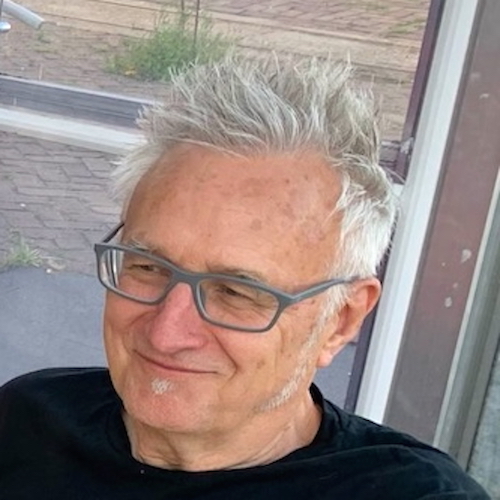 bart plantenga authored novels Beer Mystic, Radio Activity Kills, & Ocean GroOve, short story collection Wiggling Wishbone, novella Spermatagonia: The Isle of Man & memoirs: Paris Scratch & NY Sin Phoney in Face Flat Minor. He’s a founding member of NYC writer group, The Unbearables. His books YODEL-AY-EE-OOOO: The Secret History of Yodeling Around the World & Yodel in HiFi & CD Rough Guide to Yodel have created a misunderstanding that he’s the world’s foremost yodel expert. He produces monthly podcasts: Dig•Scape & iMMERSE! & as a DJ has produced Wreck This Mess in NYC, Paris & Amsterdam since forever. He is a regular contributor to the International Times of London. He lives in Amsterdam.