Vietnamese Chicken
Most vacation mornings in Cholon, I was awakened by a food vendor in the street. “Cha Siu Bao!” he’d shout in a high pitched, nasal voice. His far away words at first were broken and fit into the spaces between ordinary sounds—cars and children’s voices and parents’ scolding—until the words joined together right under my upstairs window.
“Cha Siu Bao!”
I’d jerk awake from my dream that had somehow included the man’s voice. The dream exploded as though it were a soap bubble pierced by the voice of a man selling Chinese breakfast buns.
One such morning as his voice drifted down to the other end of the street and faded away, I, in my morning fog, thought about soft, steamed buns filled with reddish savory pork. I wanted to bite into one. Right then. But my mother didn’t let me buy from street vendors. Their food was unsanitary. Better to have Cheung So buy everything fresh from the market and cook it properly for us.
That reminded me—I was going with Cheung So to market today!
I pulled the edge of the mosquito net up from under the mattress where my mother tucked it in the night before and made an escape hole. Found my flipflops, threw on a cotton top, and pulled up new peacock blue pedal pushers from Montgomery Ward. Ran down the stairs, gulped down my jook and stood ready at the back door. “Cheung So, I’m ready.”
My mother stopped me. “Mary Frances. Put a barrette in your hair to keep it out of your eyes.”
“Do I have to?”
“You don’t want to look all shaggy do you?”
I personally didn’t care if I looked shaggy. Some Chinese girls wore wispy bangs that caught in their eyelashes. It was kind of interesting, and I wondered if they used their bangs as a shield to hide behind. When people gawked at me, I needed a way to hide. Bangs wouldn’t cover my whiteness, but it would make it harder for me to see the nosy looks on people’s faces.
With barrette in place, I followed Cheung So out the back door into the alley. She carried empty woven straw bags. “Stay close to me,” she said as I removed the barrette. “There aren’t many yellow-haired, little white girls at the market.”
No kidding. I would never get used to being stared at, poked at, and asked if I could see out of my light green eyes. I’d stay close to Cheung So for protection from the curious.
We came out to the main street where Cheung So waved for a horse cart to stop. The horse stomped to shake off flies as we climbed into the open back to sit across from each other. “Central Market,” Cheung So said to the driver’s back. He whipped the horse to get it moving to a slow clip clop. The faster we went, the closer together the clips and the clops sounded. Bicycles whizzed past and around us ringing their ding-a-ling bells, while cars honked their horns at whatever was in their way or whatever they thought might get in their way.
The horse cart dropped us off at the market, a huge, round cement roof with a clock tower in the middle. There were no sides around it. Muddy paths led to the middle. Along the paths and all around the outside were stands that sold fruit, meat, live animals, vegetables, clothes, and anything else that could conceivably be displayed for sale.
“How do you know where to go?” I asked Cheung So.
“You get used to it.”
We started down one of the muddy paths, stepping over and around puddles and garbage. At one point, a rat darted across and almost ran over my foot. I screamed. It was scary, but just part of the exotic plethora of odors and visuals that overwhelmed my senses. So different from supermarkets in America, shiny and clean, where we shopped three years ago when my family was on furlough. There rows and rows of food weren’t separated by muddy paths full of garbage. There I didn’t see a single rat. Supermarkets smelled clean and had bright lights that made everything glisten.
“We get the chicken last,” Cheung So said stopping at a stand where vegetables lined up like soldiers. “Vegetables don’t flap.”
Across from the vegetable stand I looked up at rows of raw meat hanging from hooks. They dripped blood into the mud. Scrappy dogs licked where the drips fell. Everything had a smell under the market roof and most of it wasn’t good. I put my hand up to my nose to block the air flow of rotting vegetables discarded in the mud and an unknown sharp rancid smell, sweetly putrid.
When Cheung So’s straw bag was full of green onions, garlic, ginger, light green melon, carrots, bok choy, bananas, and a bag of rice, we went to the live animal side of the market. Mud-crusted pigs walked around in pens. They smelled worse than anything else I had encountered so far in the market. When the seller poked one with a stick, it squealed like it was dying.
All the chicken stands were next to each other where vari-colored chickens in covered baskets poked tan, black, and reddish feathers through the large basket holes. I could hear scuffling and muted clucking. Especially desirable chickens, like elaborately plumed roosters, were on display, tied with very short ropes. On one side were pure white chickens that had black skin and meat—a delicacy I had eaten once at a wedding feast.
Cheung So asked for a young, medium-sized chicken. The seller reached into a basket of chickens and pulled out a black one holding it upside down by its feet. Cheung So tucked the chicken under her arm and felt the front of it with her finger.
“I said a young chicken,” she said.
“Oh yes, yes, yes.” The man came back with a reddish one and Cheung So felt its chest.
She nodded. “I’ll take this one.”
He tied the chicken’s feet together and handed it to her upside down.
“What were you doing to the chickens?” I asked on our way out of the market as the chicken flapped and tried to right itself.
“The breastbone of a young chicken hasn’t turned to solid bone,” she said. “When you press it, it moves. The black one he tried to sell me was an old soup chicken.”
In the horse cart going home, the red chicken lay on the floor at our feet and panted. Its beak stayed open the entire ride.
Back home, Cheung So tied the chicken by one leg to a post in the small open-air courtyard next to the cement cistern. It ruffled its feathers and pecked at specks in the cement. It seemed relieved to be on its feet again away from the noisy market and the jiggling in the horse cart. I filled a bowl with water and placed it within its reach. It put its beak in and threw its head back to swallow, not like a dog that laps water with its head down. I wondered about the difference and decided that dogs have tongues to keep lifting the water into their mouths, whereas chickens don’t.
“What can I feed it?” I asked.
“You don’t want to feed it.”
“Yes, I do! It’s hungry.”
Cheung So sniffed. “Here’s some rice.”
I held the rice kernels down to the chicken’s level. It cocked its head at me before jerkily pecking into my hand. The way its head bobbed up and down more times than necessary, made me laugh, like it had a head stutter. Its beak tickled my palm. It was so cute I tried to pet it, but it didn’t like being touched.
Fortunately, my mother must have called me, or I became bored and left the kitchen, because a few hours later, when I walked past the courtyard again, the chicken wasn’t there. “Where’s…” I started to say. Then I saw it.
I knew the chicken wasn’t a pet. But hours ago, it had feathers and was eating out of my hand. Now it was naked. And dead. And Cheung So was chopping at it with her cleaver.
I turned away and squeezed my eyes shut. Behind me I heard “whack!” I wanted to run out of the kitchen to my mother. That’s what eight-year-olds did. But I wasn’t eight anymore. I was nine. And I had survived at school by stifling unpleasant emotions. My young brain reasoned that nobody loved a crybaby, and I desperately wanted people to care. I needed to feel special while I was away from home. At home, I knew my parents loved me, even though they loved God more. But being a needy crybaby would make me even less lovable to them.
Slowly I turned back as Cheung So raised the cleaver again and split the chicken in half, right down the middle. “Look,” Cheung So said. “Here’s the rice you fed it.” She scooped up undigested rice kernels. “What a waste!”
I squinted at the wet kernels that I had fed that chicken, the kernels that had made it happy right before it was killed. I wanted to cry. Instead, I said, “In America chickens come wrapped in plastic. You don’t have to kill them.”
Cheung So struck a match to light charcoal in a clay brazier on the floor near the open courtyard. She squatted down, her feet perfectly flat, to fan the charcoal until small flames appeared. Dusty smoke filled the air. Next to it, also on the floor, was another clay stove cooking a pot of rice whose water had boiled up and over to seal the top with what looked like white glue.
“At our house in America, we had a stove that lit when you turned a knob.” The first time I watched my mother hold the match to the gas burner, it took a little while to light and made a swooshing sound when the flame finally came. It felt like scary magic.
Cheung So grunted as she swished bok choy leaves in a basin of cold water and then removed them with a quick shake. She held them as a bunch and sliced them into even strips that she put into a bowl next to the bowl that held chunks of the chicken marinating in soy sauce and Cheung So’s special combination of condiments.
“And we had a machine that sucked dirt off the floor and other machines that washed clothes and dried them,” I said.
With an almost smile on her broad face, Cheung So set down the leafy greens and walked slowly over to me. She lifted her wide, black pants legs to her knees. “See these legs? They are your machines here in Saigon. They kneel to clean the dirt off your floors.”
I hadn’t noticed Cheung So’s legs before. They were scarred and brown. Her bare feet spread wide, solid supports for the battered legs.
“And these arms?” Cheung So said. “They wash your clothes and hang them out to dry.”
Cheung So shook her brown arms and some water dripped off her worn hands. Then she walked back to the dead chicken and the wet bok choy.
“And we have tall buildings that go up to the sky,” I didn’t know how to say skyscraper in Chinese. “And a box called a TV where you can watch shows in your home.”
Cheung So was at her chopping block, cleaver upraised. “If America is so wonderful,” she said as the cleaver came down and smashed a clove of garlic, separating the white flesh from the papery skin, “then why don’t you go back?”
We did go back to America—back to chickens wrapped in plastic, to machines that cleaned and stoves that swooshed when you lit them. Yet memories linger with Cheung So in that courtyard. I wish I could go back to answer or to apologize or just to stand there again close by.
• • •
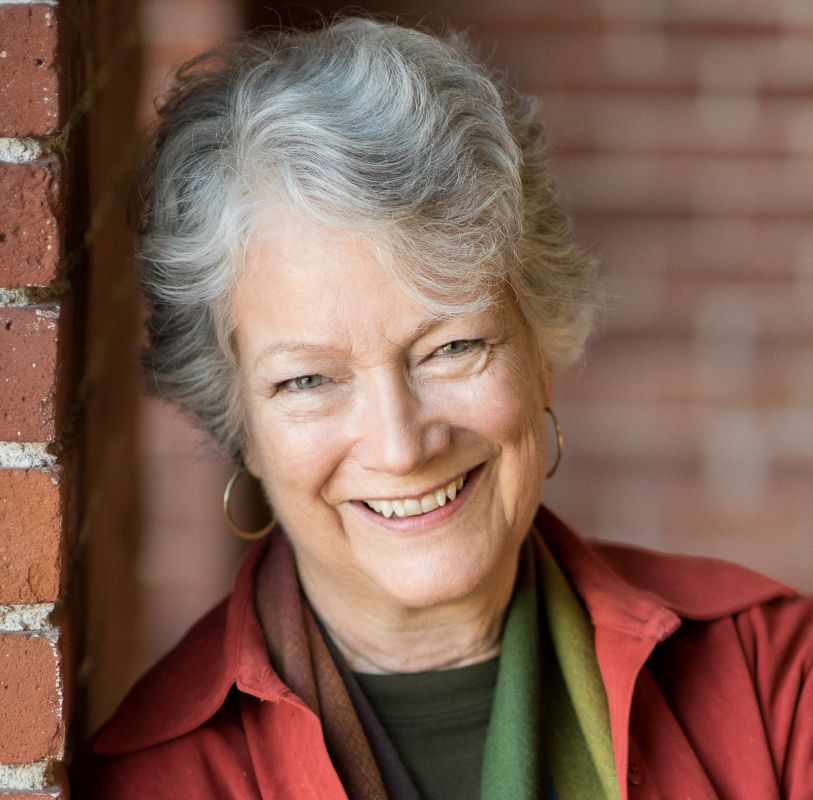 Mary Marchese grew up in Vietnam, the daughter of missionaries. She graduated with a degree in English Literature from Fairleigh Dickenson University and was an award-winning technical writer for 16 years. Her short stories have appeared in Smoky Quartz, an online journal of literature and art.